Project concept
STEM Girls: Path to Success in Engineering is a European project funded by Erasmus+ that aims to increase the interest of girls and young women in engineering and, more broadly, in STEM disciplines. Building on scientific evidence and the prior experience of the partner institutions, the project addresses the cultural, social, educational and gender-related barriers that contribute to the low participation of women in these fields, despite their high employability and social impact.
Over a three-year period (2025–2028), the consortium will implement a comprehensive approach that combines hands-on engineering workshops for secondary school students; mentoring programmes led by women engineers; targeted training for teachers, families and career advisors; the development of inclusive educational resources featuring female role models; and the creation of the European Observatory on Women in Engineering, designed to analyse and share comparable data across countries.
The project brings together the University of Alicante (Spain), the Arctic University of Norway – UiT (Norway) and Vilnius Gediminas Technical University – VILNIUS TECH (Lithuania), together with the educational centres IES San Vicente (Spain), Tromsø International School (Norway) and the Vilnius Engineering Lyceum (Lithuania). The consortium also includes the Italian organisation CESIE, the technology company NTT DATA Spain, and the NGO InnovaEquity (Spain).
Objectives and impact
General and specific project objectives
The main objective of the STEM Girls project is to foster the motivation and participation of girls in engineering and architecture studies, strengthening their interest in disciplines that are essential for a rapidly evolving future shaped by digital transformation, the green transition and technological innovation. In doing so, the project contributes to reducing the gender gap in professions that are strategic for sustainable development and Europe’s long-term competitiveness.
Specific Objectives
- Analyse the cultural, social and educational factors that lead girls and adolescents to discard engineering pathways, generating evidence to inform educational and institutional practices.
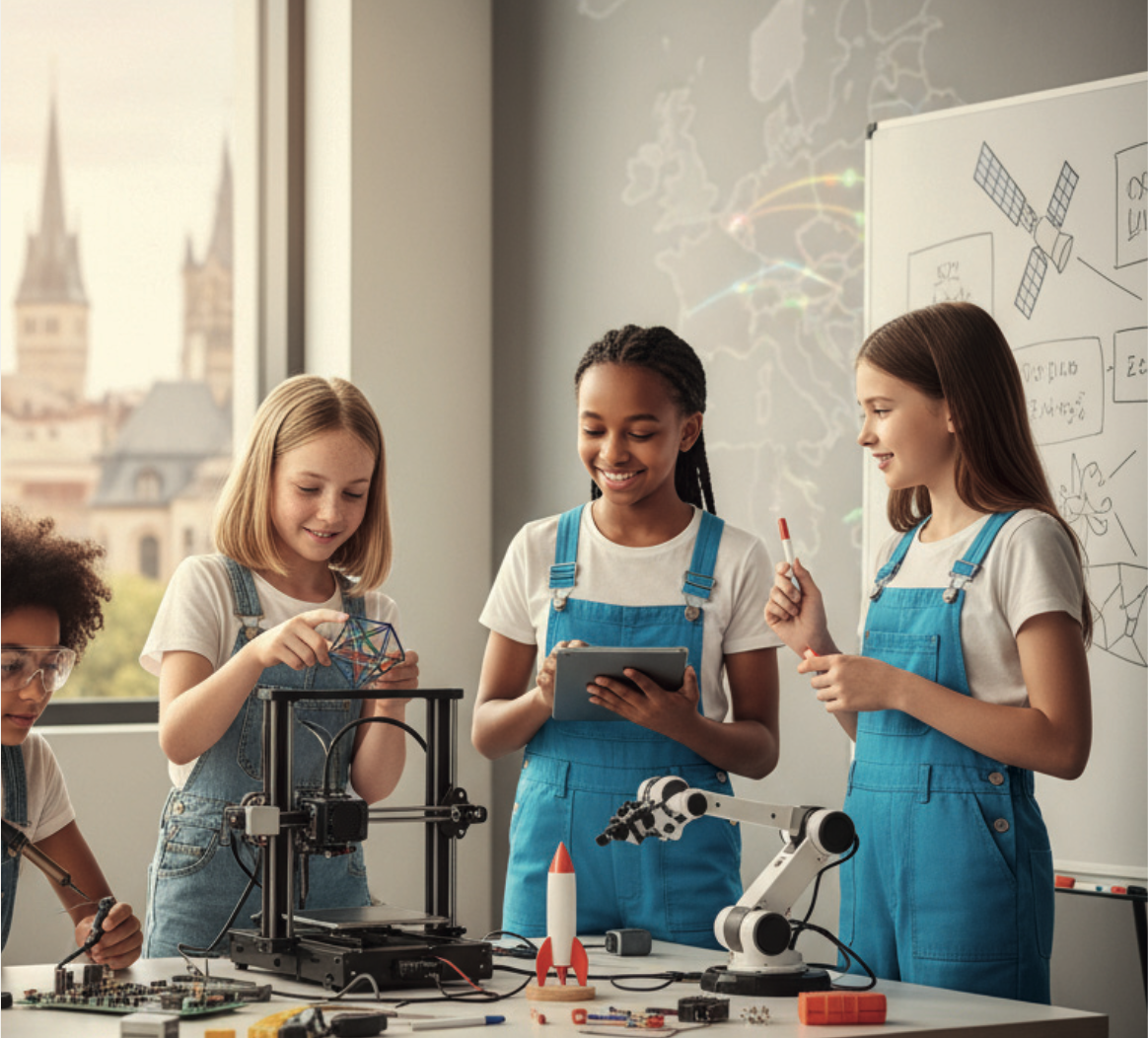
- Design and implement hands-on workshops that present engineering as a creative, socially relevant and professionally attractive discipline.
- Strengthen the visibility of female role models through mentoring programmes and outreach materials that showcase the trajectories of women engineers.
- Provide targeted training for teachers, families and career advisors to identify gender biases and foster inclusive learning environments.
- Promote structural change in schools through replicable methodologies, resources and practices that support girls’ engagement with STEM disciplines.
- Generate comparable European knowledge through the European Observatory on Women in Engineering, producing data-driven insights to support long-term policy development.
Expected Impact
- At least 500 girls will participate in hands-on engineering workshops across Spain, Norway and Lithuania.
- A minimum of 250 professionals (teachers, counsellors and families) will receive training on inclusive, gender-responsive educational approaches.
- The project will produce inclusive educational materials, videos, guides and communication tools designed for reuse and adaptation across Europe.
- The visibility of women engineers as role models will be significantly increased through mentoring and targeted communication activities.
- The project will generate updated evidence and comparable data to inform educational policies and future interventions aimed at promoting gender equality in STEM.
- A European network of schools, universities, social organisations and industry partners will be strengthened, ensuring sustainability, collaboration and long-term impact beyond the project’s duration.
Workplan
WP1 – Project Management October 2025 – August 2028
Coordinated by the University of Alicante, this work package ensures the correct technical, financial and administrative implementation of the project. It includes overall planning, task monitoring, partner coordination and continuous oversight by the University of Alicante’s International Project Management Office (OGPI).
WP2 – Research, Training and Resource Development October 2025 – August 2028
This work package analyses the cultural and educational barriers that discourage girls from pursuing engineering and establishes the European Observatory on Women in Engineering to generate comparable data across partner countries. It develops inclusive educational resources for teachers, families and advisors, provides training to support gender-responsive practices, and fosters long-term cooperation through support networks linking schools, universities and partner organisations.
WP3 – Practical Workshops for Girls February 2026 – March 2028
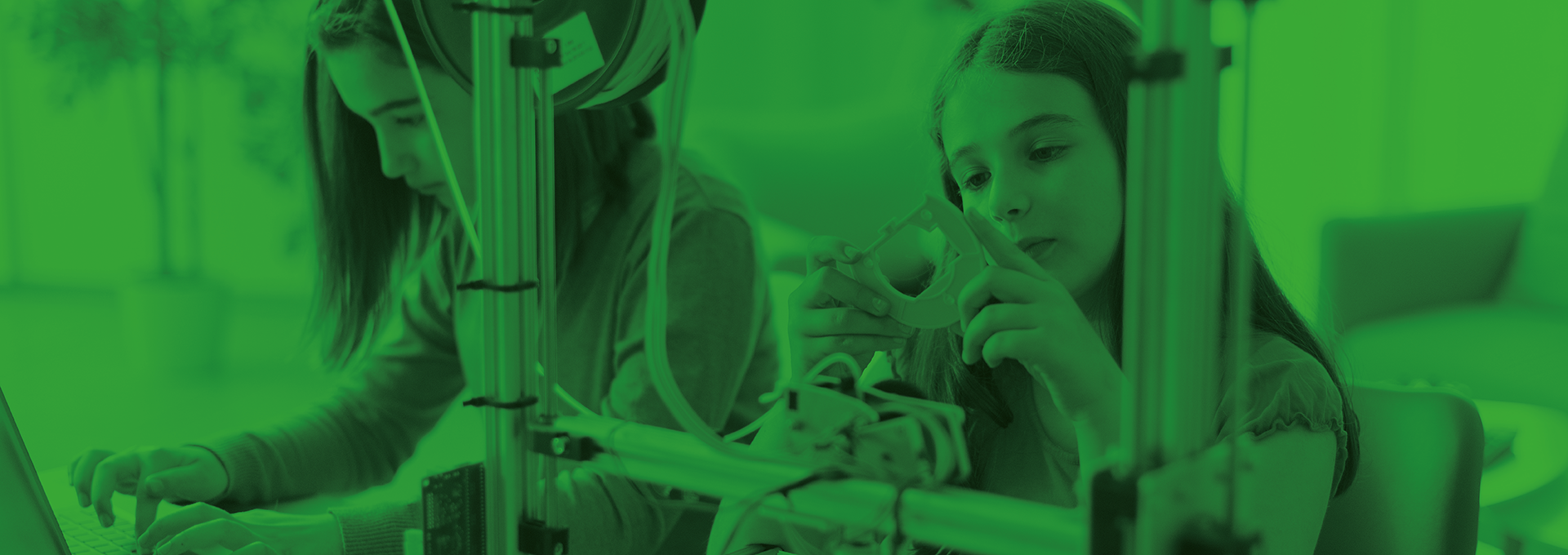
A total of 18 hands-on workshops will be implemented (six in each participating country), presenting engineering in a creative, accessible and engaging way. Activities will integrate programming, 3D design, robotics, applied technology and sustainability, showcasing the social relevance and professional opportunities of engineering fields.
WP4 – Evaluation and Impact May 2026 – August 2028
This package includes the design of evaluation tools, data collection and analysis through the Observatory and project activities, as well as the production of reports on outcomes and lessons learned. It also involves feedback and sustainability events to ensure long-term impact beyond the project’s completion.
WP5 – Communication and Awareness-Raising October 2025 – August 2028
Led by the University of Alicante, this work package develops the project’s European communication strategy, including digital campaigns, educational content, visual materials, social media presence, media outreach and international dissemination events. Its goal is to enhance the project’s visibility and promote the replicability and sustainability of the resources created.
Deliverables